I designed laboratory software for SFBIO that turns complex chemical workflows into clear, dependable controls for connected lab hardware.
Some interfaces help people choose a film or order a pair of shoes. Others have to help chemists control sensitive laboratory processes without getting in the way of the work itself.
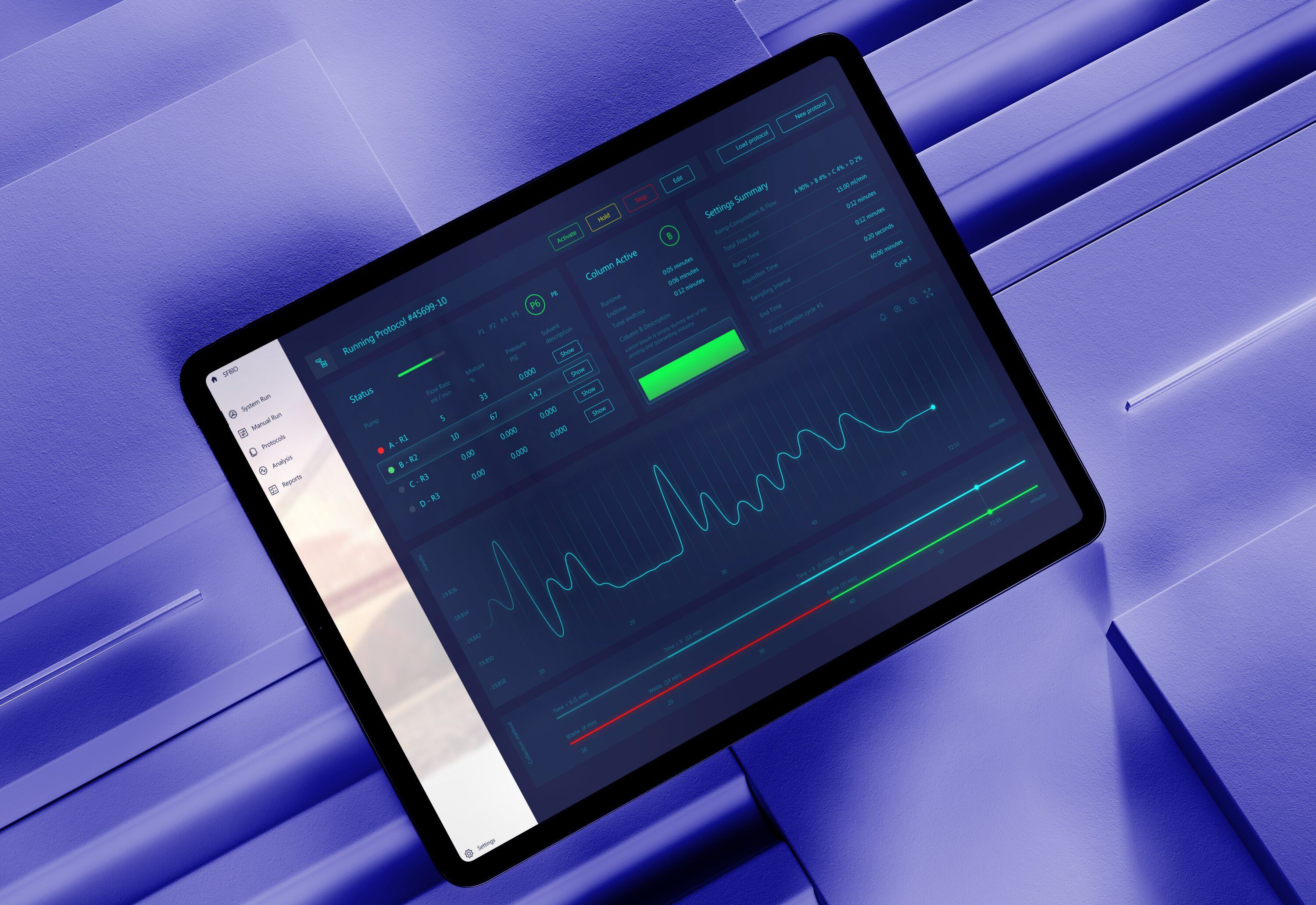
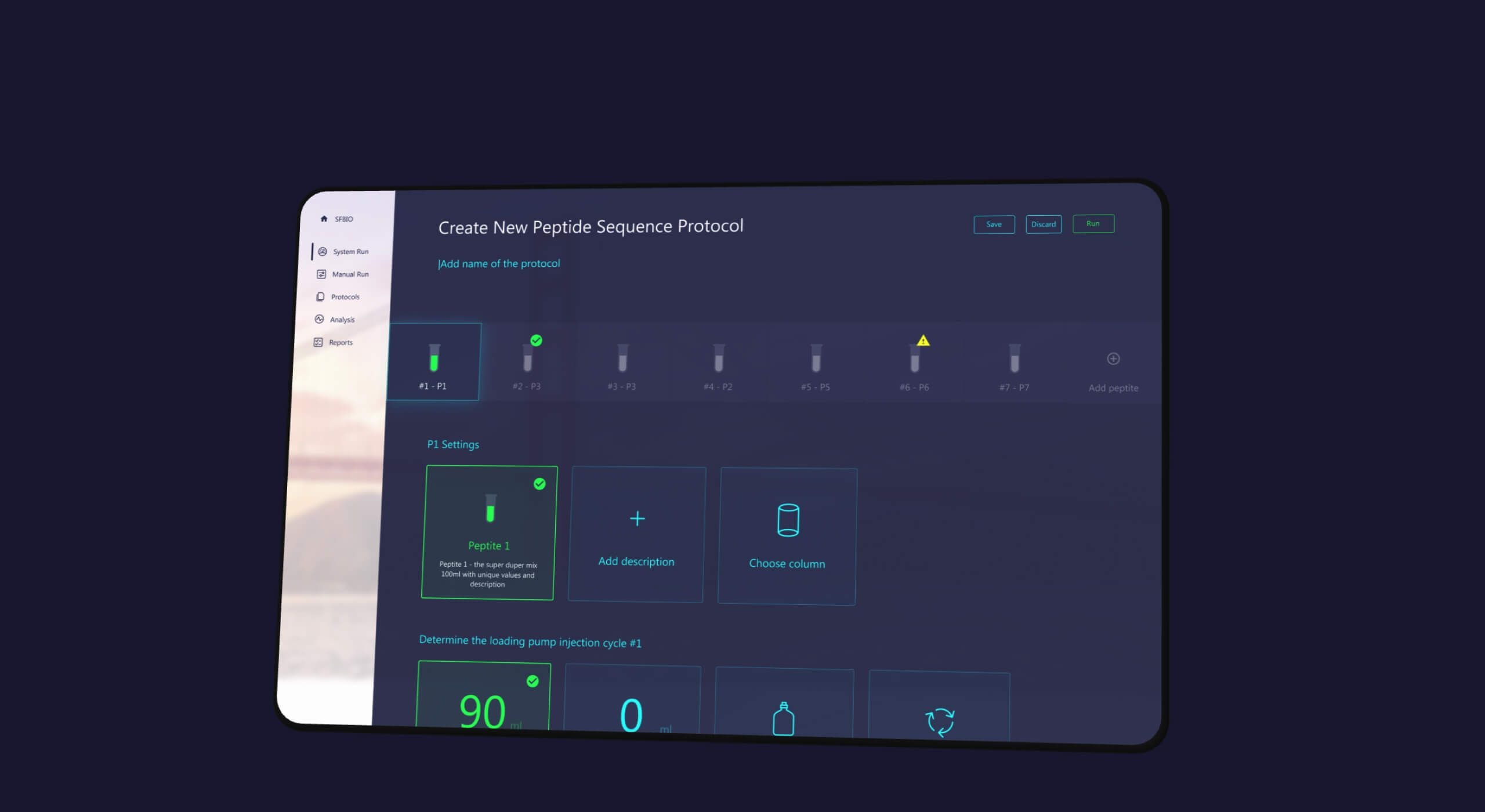
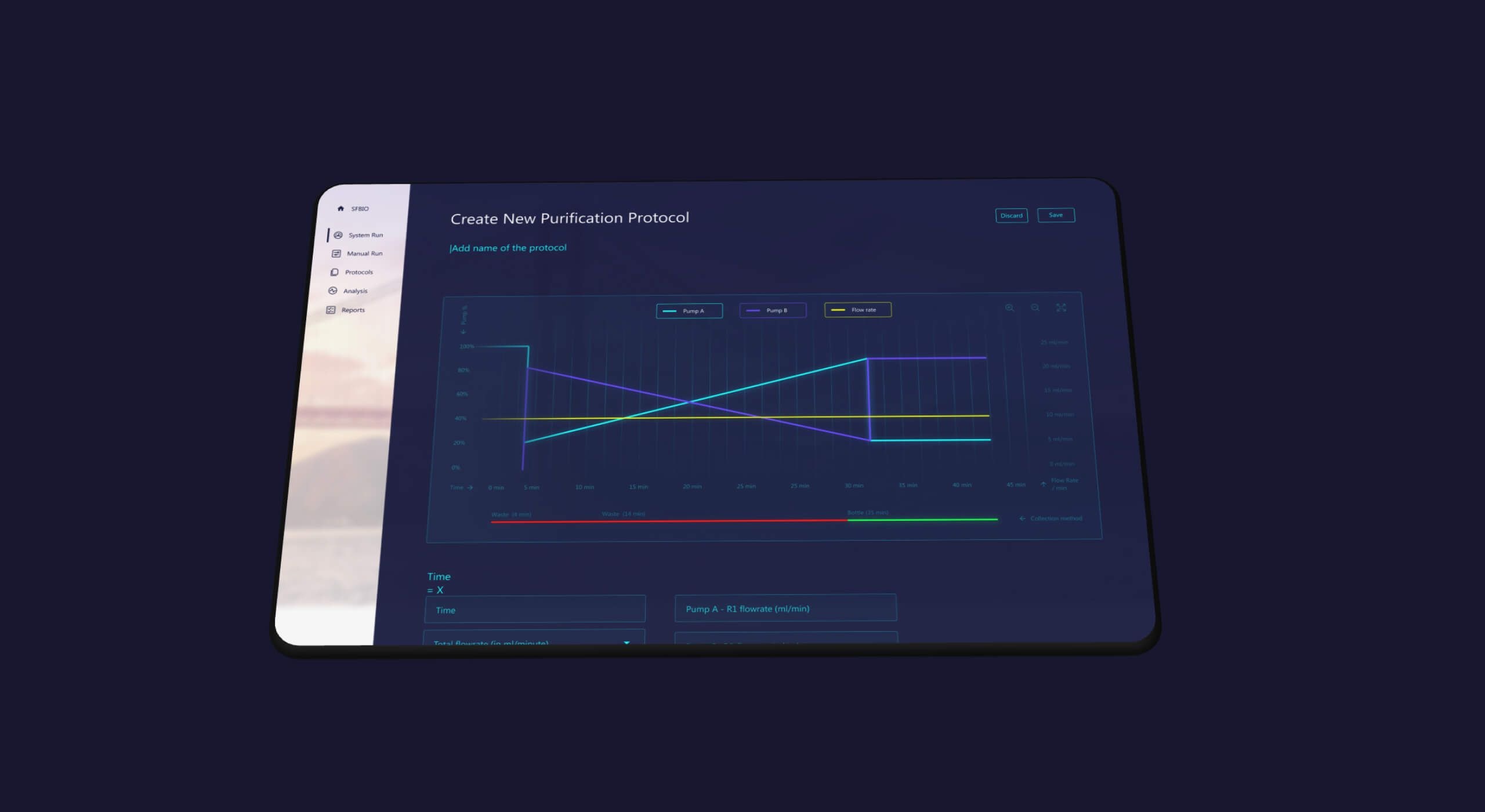
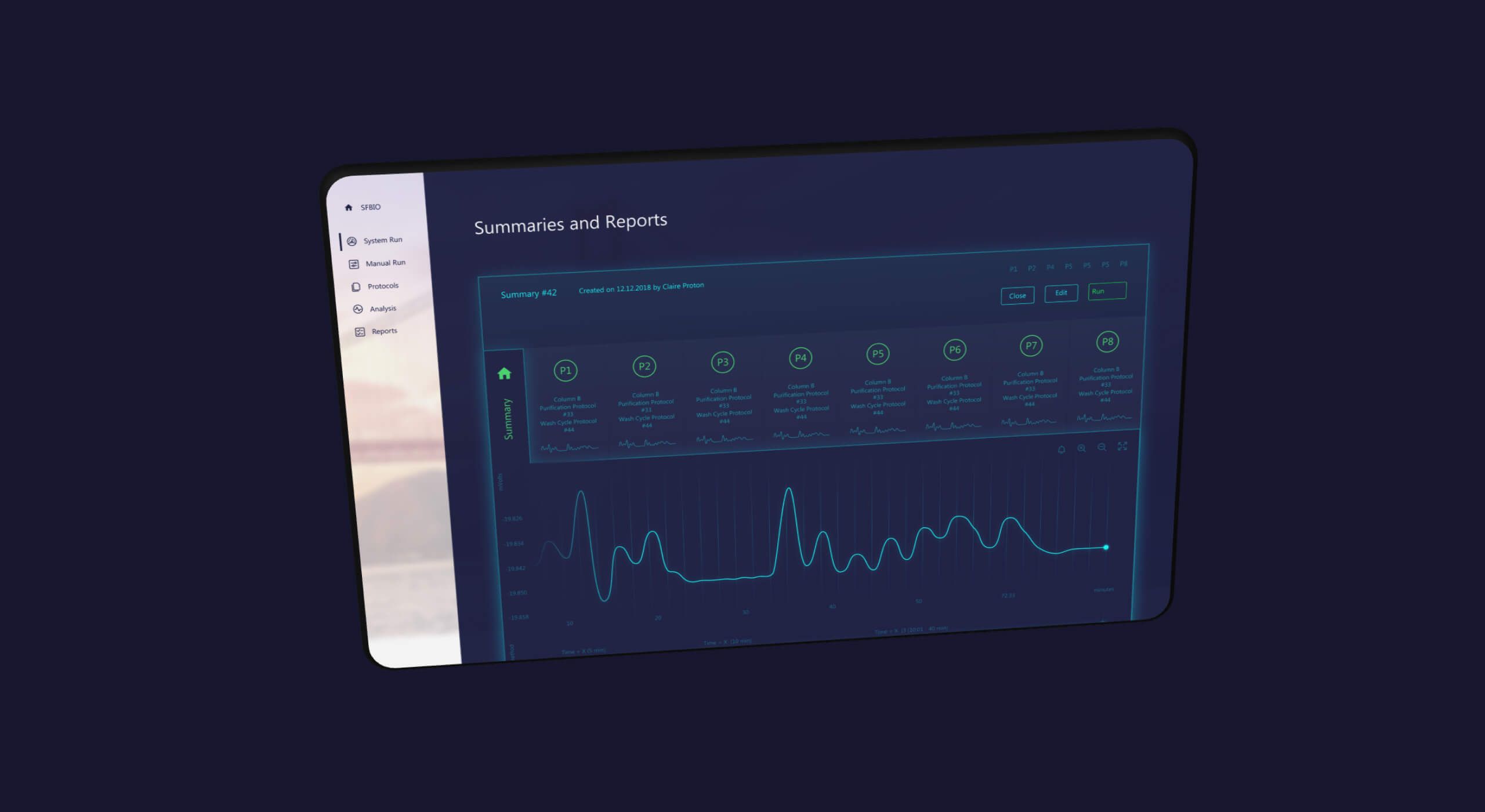
That was the challenge behind my work with SFBIO: designing laboratory software that could turn complex chemical workflows into clear, dependable actions on a large touch display.
SFBIO’s team of forward-thinking American chemists came to me with a highly specialized problem. Their software needed to connect directly with advanced laboratory hardware while remaining intuitive enough for use inside an active lab environment.
The science could stay complex. The experience could not.
The challenge
Scientific software often makes a difficult tradeoff: powerful functionality on one side, painful usability on the other.
In a laboratory, that friction is more than an inconvenience. Chemists need to work with precision, speed, and confidence. They should not have to fight the interface while managing sensitive experiments or connected equipment.
My task was to make the software feel approachable without hiding the depth of what it could do.
The platform needed to:
- Integrate with laboratory hardware
- Support highly specialized chemical workflows
- Operate smoothly on large 24-inch touch displays
- Handle complex data interactions
- Reduce friction during operational sequences
- Maintain precision-focused usability
- Follow the Microsoft Fluent Design System
It could not merely look modern. It had to remain clear and dependable in real laboratory conditions.
Designing for scientific precision
I approached the project by focusing on what users needed to understand, decide, and do at every stage of their work.
The Microsoft Fluent Design System provided a useful foundation. Its familiar interaction principles helped me create a professional visual environment with cleaner hierarchy, more predictable controls, and a stronger sense of orientation.
That balance mattered. The interface needed to feel calm and accessible while communicating that every action was connected to a highly technical system.
Turning complex workflows into intuitive systems
The challenge was never to simplify the science. It was to simplify how people interact with the science digitally.
I worked closely with the chemistry teams to understand laboratory procedures, hardware interaction patterns, workflow bottlenecks, critical operational sequences, and the way people behave when accuracy matters.
Those conversations shaped the information architecture, interaction logic, and visual hierarchy. Instead of forcing users to decode the system, the interface guided them through the work in a more natural order.
The goal was simple: help chemists spend more attention on their experiments and less on software mechanics.
Touch-first design in a demanding environment
Designing for a 24-inch touch display introduced its own set of constraints. Controls needed to be easy to reach, readable at a glance, and forgiving enough for use during active lab work.
I paid particular attention to:
- Clear visual hierarchy
- Touch-friendly interaction zones
- Fast workflow navigation
- High readability
- Reduced cognitive overload
- Efficient task progression
Every interaction had to earn its place. The more confidently a user could move through the system, the less mental energy was spent managing the interface.
Built through collaboration and iteration
A project like this cannot be solved from assumptions or screenshots alone.
The software evolved through close collaboration, testing, and refinement with the chemistry teams operating the system. Their feedback revealed where a workflow felt natural, where a decision needed more context, and where an interaction still created unnecessary hesitation.
Each iteration brought the digital experience closer to the reality of the laboratory. The process demanded patience, precision, and a willingness to keep learning from the people who understood the environment best.
The outcome
The result was a laboratory software experience designed to make complex procedures easier to manage through clear, structured, and intuitive interactions.
It connected experimental workflows with laboratory hardware while preserving the precision and capability the work required.
For me, the most important outcome was not making a highly technical system look simple. It was making it feel usable without compromising what happened underneath.
Design beyond consumer products
This project reminded me that meaningful UX/UI work is not limited to consumer apps, marketing websites, or familiar digital products.
Some of the most demanding design problems exist inside specialized industries, where usability directly influences operational performance, accuracy, and real-world outcomes.
Working with SFBIO showed me how much thoughtful interface design can change the experience of technical work. When the right decisions are made carefully, even a complex scientific system can become clearer, calmer, and easier to operate.